Shaky economy forces Americans to rediscover community
By John Blake
(CNN) -- Leslie Gage knew it was coming, but that didn't take away the pain.
Atlanta Community ToolBank volunteers build playground, and relationships, in their community.
She was working as an architect for a small company in Atlanta, Georgia, when the company's founder asked her into his office. He took off his glasses and rubbed his hand against his forehead.
"We just can't afford to keep you..."
Gage doesn't remember what he said next. She does remember what followed for her: denial, depression and long days of watching cable TV alone at home.
She eventually joined a nonprofit group that renovated homes in her neighborhood, but she also built something else: a place in her community.
Now she wonders whether more Americans will arrive at the same conclusion that she has: We have to rebuild our sense of community, not just our banking system, if we're going to survive.
"This is when we're going to define ourselves for future generations," Gage said. "Are we the type that turn inward, or are we the type that turn outward and help one another?"
The answer to Gage's question is mixed: Some Americans are turning to community while others are retreating to their cocoons. Fewer, however, are turning to organized religion for support.
According to one perspective, more Americans turn to their remote, not their neighbor, in bad times. Netflix officials reported a 45 percent jump in profits during the end of 2008. Gross movie ticket sales are up 18.8 percent this year, according to BOXOfficeMojo.com. And home entertainment business sales are surging, according to sales figures.
Yet there are other signs that the economy is also inspiring Americans to turn to one another for everything from solace to stew.
Making stew for the neighbors
Nonprofit groups report a surge in volunteers. Peace Corps applications are up 16 percent from last year. Online applications for AmeriCorps, a federal program where volunteers tutor needy children and build housing for the poor, have increased three times faster than a year ago.
Thousands of Americans have organized Economic Recovery House Meetings in all 50 states at the urging of President Obama to talk about the stimulus plan and help one another get through the economic crisis.
Claire Anderson, who organized one of those house meetings in Seattle, Washington, said people have have established barter networks, organized lending networks and planted community gardens.
Bad times make good neighbors, she said.
"I hear people say I make more dinners for my neighbors way more than I did five years ago, when I didn't even talk to them," Anderson said.
Anderson said she's inspired by reading stories of how Americans acted during the Great Depression. They weren't too proud to ask for or give help.
"Now I wouldn't think of making a big pot of stew without taking it to my neighbors," she said.
Turning to Google instead of God
The duty to one's neighbor is a fundamental belief in most religions. It would seem natural that more people would turn to their church, mosque or synagogue for community in tough times.
But don't expect a shaky economy to lead to a national religious awakening, said Nancy Dallavalle, chairwoman of the Department of Religious Studies at Fairfield University in Fairfield, Connecticut.
While individual communities of worship may see some uptick in their numbers, Dallavalle said, fewer Americans depend on traditional religion for support.
Some studies reinforce her point. According to the American Religious Identification Survey, almost all religious denominations have lost members since 1990. Membership in mainline Protestant denominations has fallen for the past 30 years and has been widely documented.
Dallavalle says most Americans will turn to pop culture rather than the church for inspiration.The infomercial that promises wealth or the reality TV makeover show -- more Americans will look at these for inspiration, she said.
The Internet also siphons people away from traditional religious communities during tough times, she said. Americans who have grown up outside organized religion prefer to get their inspiration through the Internet: online motivational tracts, inspirational speakers and self-help gurus.
"Folks might not turn to God as much as they turn to Google," she said.
Whether people turn to God or Google, this economic crisis will shift people's values, said Melissa Harris-Lacewell, a commentator and political science professor at Princeton University.
"Having less immediately forces us to decide what we value," she said. "Our priorities in times of crisis reveal our core beliefs."
An economic crisis may even cause Americans to rethink what's worth admiring, she said. Instead of watching the "Real Housewives of Orange County," more might become drawn to the real families of ordinary America, where couples lose jobs and get sick, but they still stick together, she said.
"We say that people are valuable based on what they can produce, and now we see huge portions of our country that are unable to consume in the ways they previously had," Harris-Lacewell said. "We'll have to create a new measuring stick of what makes us valuable as people."
Gage, the Atlanta architect, had to do the same for herself. After she was laid off, she experienced an emotional tailspin. For several weeks, she refused to apply for unemployment benefits because she didn't want to get more depressed shuffling along an unemployment line.
"I didn't have the motivation to get up and go," she said.
Then she volunteered at the Atlanta Community ToolBank. The nonprofit group lends tools and renovates home for the elderly and disabled. She quickly realized that people weren't just inviting her into their homes. They were inviting her into their lives.
She still remembers the first neighbor she visited on behalf of ToolBank. The woman offered her breakfast in her living room and directed Gage's attention to her "Wall of Fame," which held portraits of her children.
"She had 13 children, all of them grown and several with college degrees," Gage said. "She was so proud of each and every one of them because, as she said, education of any kind was hard to come by when she was a girl. ... I won't ever forget that."
Why economic uncertainty is 'awful' for bringing people together
Gage's story may be touching, but it doesn't mean it fits into a larger pattern, said one influential sociologist.
David Putnam is the author of "Bowling Alone," a 2000 book that argued that many Americans are living more isolated lives. The book concluded, after wide-ranging interviews and numerous studies, that Americans belong to fewer civic groups, know their neighbors less and meet less often with family and friends.
That solitary impulse in Americans actually gets worse during hard economic times, Putnam said.
He said economic uncertainty has an "awful" effect on social connections because people become depressed and lose their sense of self-esteem when they lose a job, he said.
One study looking at the Great Depression demonstrated this, Putnam said. He said that civic engagement, measured by involvement in groups such as local PTA groups and Elks lodges, steadily rose in the U.S. from the turn of the 20th century.
But between 1930 and 1935, during the height of the Great Depression, many civic organizations lost half of their membership, he said.
"Almost everybody believes that during the [Great] Depression that everyone got cuddled up next to each other and said, 'we're all in this together,' " Putnam said. "I'm not denying that some of that occurred, but what's more typical is that people hunker down and pull in."
Americans eventually recovered their engagement in community. He said the country's greatest civic book occurred between 1940 and 1965. That boom was driven by "the Greatest Generation," the men and women who came of age during World War II.
"They had just been exposed to five years of war bond drives, scrap metal drives and Boy Scouts asking people to give up rubber mats in their car for the war," Putnam said. "They lived with a sustained notion of we're all in this together."
Perhaps that will happen now. Gage said she's seen it happen in the United States before.
Gage lived in New Orleans, Louisiana, in 2005 when Hurricane Katrina demolished much of the city. What she remembers most is not what was destroyed by Katrina but what was borne out of it: a luminous sense of community.
As she walked through the neighborhoods, she said, she kept encountering people who were cleaning up and looking to help others.
"People I had never seen before were asking me, 'Do you need any help? How are things going with you? Do you need any help moving that refrigerator?' And they were serious. It was all over the city, and I heard the same stories."
Gage has found a job at an ecofriendly architectural firm in Atlanta. But her memories of her neighbors in New Orleans, and the people she met through the ToolBank, convince her that Americans won't live by Netflix alone in the days ahead.
"It was a tough time, but I saw the entire city come together," Gage said. "I don't see why we can't do that."
Tuesday, May 26, 2009

Poem for Claire by Holly Schwarztol
Written for me November 19, 2006 in Miami when I left for Seattle.
When did I say
It would ever be okay
For you to leave?
How do we let go
Of all the years
And all we’ve known
From bliss to
Heartache and back again
We’ve seen it all
Though I know
We’ll always be close
I wanted you to stay
And remain where I am
For all the coming years
Of dinners and lunches
And knowing you’d be
Right where I could
Find you?
Fate robbed you of your sight
And now steals you from mine
And I’m just not ready
For you to move clear
Across this vast country
To another world
And I do know
That you had little choice
And that ultimately this
Will most likely be
A good move for you
And maybe I’ll learn
To accept that you
Just don’t live here anymore
But I’m not there yet
I want to hold onto you
And keep you from going
And keep you near
Is this a poem?
Or something else?
Does it convey
The sense of loss
And deep sadness
I am feeling?
In this week of Thanksgiving
As you fly away
Carrying my heart
When did I say
It would ever be okay
For you to leave?
How do we let go
Of all the years
And all we’ve known
From bliss to
Heartache and back again
We’ve seen it all
Though I know
We’ll always be close
I wanted you to stay
And remain where I am
For all the coming years
Of dinners and lunches
And knowing you’d be
Right where I could
Find you?
Fate robbed you of your sight
And now steals you from mine
And I’m just not ready
For you to move clear
Across this vast country
To another world
And I do know
That you had little choice
And that ultimately this
Will most likely be
A good move for you
And maybe I’ll learn
To accept that you
Just don’t live here anymore
But I’m not there yet
I want to hold onto you
And keep you from going
And keep you near
Is this a poem?
Or something else?
Does it convey
The sense of loss
And deep sadness
I am feeling?
In this week of Thanksgiving
As you fly away
Carrying my heart
Friday, March 6, 2009
On falling
Falling is fatal for old people. For us it is a darn nuisance. Life is an interesting challenge with visual impairment and even more so with a broken wrist. My clever tenant who is 81 got bumped in a supermarket and started to fall. Instead of saying what people usually say,”Oh, Oh”, he said,”Catch me.” Now isn't that clever?
Two or three people grabbed him and he didn't fall. Bravo!
These are called adaptive techniques. We can learn them and now you have.
My friend John, who I met at the lighthouse for the blind, told me that he had been visually impaired all his life and had never driven a car. He always wanted to. His friends took him out on a powerboat into the Atlantic Ocean and gave him the steering wheel. There were no other boats around. It was clear to the horizon. They said, “Go for it, John” and he put the boat in full throttle and drove. He loved the feeling of the motor and the energy of the boat and that he had full control.
Control is one of the areas that we sometimes feel we have given up.
What has been wonderful for me has been taking bus lessons. I have wonderful instructors from Laidlaw transportation. They have a whole division for private us instructions and help the elderly and handicapped and the visually impaired learning how to use the bus systems in Seattle. I was so excited. My first trip was to Capitol Hill where I go to a low vision support group. Everyone in the group comes by bus and I was arriving by taxi so I was excited to learn how to get there by bus. The tricky part is knowing where to get off the bus, although the bus driver usually tells you, but not always. Once off the bus I have to know whether to go around the corner and wait for the bus or crossover the street and wait for the next bus or cross diagonally and wait for the bus. The transfers are tricky. Especially because in Seattle downtown streets run one way so there is always some walking when transferring. I made it all the way up to Group Health with my bus instructors and then they asked me if I could find my way to my classroom. I said, “Yes, I think I can." I started to walk forward and along came a very dapper-looking gentleman, obviously cited as he was walking very fast and with a balance in his walk, looking good. I stopped him and asked if he knew the way to the South building. He responded, ”Take my arm and I will lead you there.” So I did and there I was in a few minutes in the South building. I turned around and there were my two instructors and I smiled and said,” I did it!” They said, ”You failed, you were supposed to get here by yourself.” “I thought that my job was just to get here, whichever way worked. And besides, wasn't he a cute guy?” My instructor said,” So was Ted Bundy!” That was my first day of bus glasses. I did get better, more compliant is probably a better word. But only when my instructors are watching. I still like to ask people for help because it is a way of engaging others and I like to talk to people. I have pretty good radar and usually pick middle-class regular kind of folks. I could have been ashamed but I was just amused.
Once I got the idea of how to get around my bus instructor inadvertently told me how to get to the casino on Bainbridge Island. It is practically a straight run from my apartment. I get on the bus across the street and take it to the end of the line. The 16 bus ends at the Bainbridge ferry. I get on the ferry, take a nice little ferry ride, get off the ferry and there is a bus waiting to take me to the casino. The casino bus meets every ferry. In 15 minutes I was playing blackjack. Can I see the cards? No. But I have a system. I tell the dealer that I can't see the cards. Since everyone’s’ cards are up, the dealer or sometimes the person just sitting next to me tells me what I have. The only other piece of information I need is what the dealer is showing. I have a seven and a four in the dealer has an eight. I double down and usually win. The dealer gives me my winnings in five dollar chips so that I can count them. When I have mixed chips like green chips which are $25 then I can get mixed up and occasionally make a bet larger than I planned. . But once the dealer knows my situation they are usually watching out for me. I am so happy at the casino. I feel so empowered being able to get there and play with the help of no one except the dealer. I can come and go, go for lunch, go to the table, and have the best time.
Two or three people grabbed him and he didn't fall. Bravo!
These are called adaptive techniques. We can learn them and now you have.
My friend John, who I met at the lighthouse for the blind, told me that he had been visually impaired all his life and had never driven a car. He always wanted to. His friends took him out on a powerboat into the Atlantic Ocean and gave him the steering wheel. There were no other boats around. It was clear to the horizon. They said, “Go for it, John” and he put the boat in full throttle and drove. He loved the feeling of the motor and the energy of the boat and that he had full control.
Control is one of the areas that we sometimes feel we have given up.
What has been wonderful for me has been taking bus lessons. I have wonderful instructors from Laidlaw transportation. They have a whole division for private us instructions and help the elderly and handicapped and the visually impaired learning how to use the bus systems in Seattle. I was so excited. My first trip was to Capitol Hill where I go to a low vision support group. Everyone in the group comes by bus and I was arriving by taxi so I was excited to learn how to get there by bus. The tricky part is knowing where to get off the bus, although the bus driver usually tells you, but not always. Once off the bus I have to know whether to go around the corner and wait for the bus or crossover the street and wait for the next bus or cross diagonally and wait for the bus. The transfers are tricky. Especially because in Seattle downtown streets run one way so there is always some walking when transferring. I made it all the way up to Group Health with my bus instructors and then they asked me if I could find my way to my classroom. I said, “Yes, I think I can." I started to walk forward and along came a very dapper-looking gentleman, obviously cited as he was walking very fast and with a balance in his walk, looking good. I stopped him and asked if he knew the way to the South building. He responded, ”Take my arm and I will lead you there.” So I did and there I was in a few minutes in the South building. I turned around and there were my two instructors and I smiled and said,” I did it!” They said, ”You failed, you were supposed to get here by yourself.” “I thought that my job was just to get here, whichever way worked. And besides, wasn't he a cute guy?” My instructor said,” So was Ted Bundy!” That was my first day of bus glasses. I did get better, more compliant is probably a better word. But only when my instructors are watching. I still like to ask people for help because it is a way of engaging others and I like to talk to people. I have pretty good radar and usually pick middle-class regular kind of folks. I could have been ashamed but I was just amused.
Once I got the idea of how to get around my bus instructor inadvertently told me how to get to the casino on Bainbridge Island. It is practically a straight run from my apartment. I get on the bus across the street and take it to the end of the line. The 16 bus ends at the Bainbridge ferry. I get on the ferry, take a nice little ferry ride, get off the ferry and there is a bus waiting to take me to the casino. The casino bus meets every ferry. In 15 minutes I was playing blackjack. Can I see the cards? No. But I have a system. I tell the dealer that I can't see the cards. Since everyone’s’ cards are up, the dealer or sometimes the person just sitting next to me tells me what I have. The only other piece of information I need is what the dealer is showing. I have a seven and a four in the dealer has an eight. I double down and usually win. The dealer gives me my winnings in five dollar chips so that I can count them. When I have mixed chips like green chips which are $25 then I can get mixed up and occasionally make a bet larger than I planned. . But once the dealer knows my situation they are usually watching out for me. I am so happy at the casino. I feel so empowered being able to get there and play with the help of no one except the dealer. I can come and go, go for lunch, go to the table, and have the best time.
Getting information
As I pour my tea the person sitting next to me says,” 0h, oh!”.
Now I know that the cup is full or my cup runneth over.
Now I know that the cup is full or my cup runneth over.
It's all about adapting
August 4, 2005 I lost my sight in Santa Fe, New Mexico. With my kind of condition one usually loses sight due to a stroke which happens as you wake up in the morning or as you put your feet on the floor. It is due to a very low blood pressure. So I probably lost my sight in the early morning but I didn't realize it until I was driving. It was the day of my niece Rebekah’s wedding reception. I was with my friend Irene and we were staying at someone's house. It was a difficult driveway to get out of and Irene directed me out of the driveway. I was focusing on what she was saying and not really about what I was seeing. And as I drove down the lane things were looking very fuzzy. I came to a stop light and didn't know whether to stop. I stopped and sort of figured out that I had to make a left turn. I started to make a left and I realized that I no longer could see what I was doing. I said to Irene, “I can't see the road.” She said, ”Pull over!” I said,” I can't see the side of the road.” She said what any intelligent person would say at this time, “Yaaaah!” Screaming, she eventually guided me over, took the wheel, and I have never driven since. It was the consensus of the people at the wedding reception that I should get to a lower at altitude as soon as possible as the stroke to my optic nerve may have been caused by the altitude. Santa Fe is at 7000 feet. We left the party, packed up and scooted out of town as fast as we could. We got down to Albuquerque and that was as low as we can go without getting our plane to Miami. I was in a bit of a shock, sad, but not dysfunctional as you can see next. As we pulled in to the parking lot of our hotel in Albuquerque, I saw a sign and I asked Irene what it said. She said that it was a casino bus that would take a hotel guest to a casino. I decided to go after dinner. Our plane did not leave until the next morning. After dinner I got on the casino bus. Irene thought I was crazy and would not let me go alone even though she dislikes casinos. We went on the bus ride and I got to the casino and started to play blackjack. I was so happy that I could do something. Once Irene realized that I was safe and could get right home on the same bus, she left, went back to our hotel, and I stayed at the casino and played and played. Irene could not believe what I was doing. She said that if she had lost her sight that day she would be crying and freaking out and here I was at the casino playing blackjack.
Although there were some crying periods, it has been a great deal of fun as well. Amazing life experiences that I could never have imagined before. I was a student at the Miami lighthouse for the blind. I was studying computer, personal care, mobility, and exercise. I especially liked the exercise as we had a marvelous trainer named Joe and he taught me strength training so my back stopped hurting and lots of balance exercises so that I did not lose my balance when I was out walking. Although I have a class schedule, there were times when I did not go to class. Sometimes I would get into a discussion with somebody and it was so interesting that I just didn't go to my next class.. After all, it's not like college whereyou get demerits for not showing up or possibly flunk the class.
One day my counselor called me into the room and sat me down. I thought, “Oh, no, they're going to throw me out for skipping classes.” I was so worried. I had started to really enjoy the computer classes and just being at the Lighthouse with people like me. But Sylvia, my counselor said,” no, we are not throwing you out - just the opposite - we are giving you an award for being the student who has accomplished the most this year in computers. The Rotary club will be giving you an award next week at a luncheon.” I was so amazed and thrilled. And this was the first of a number of awards. My exercise teacher chose me as the student who had accomplished the most in exercise class. This was an amazing shock to me. Here I am 66 years old, chubby and blind and I am being awarded for my exercise diligence. But we had a huge article about Joe and me and our exercise class in the Miami Herald. This was followed by a television show where we simulated the blind exercises we did. We even did a local radio show. The newspaper article went national and I got a call from my cousin in Connecticut who said that she had opened her newspaper and there I was exercising in the blind school. She was thrilled, sent me a copy of the article, and now I have it in my scrapbook.
Although there were some crying periods, it has been a great deal of fun as well. Amazing life experiences that I could never have imagined before. I was a student at the Miami lighthouse for the blind. I was studying computer, personal care, mobility, and exercise. I especially liked the exercise as we had a marvelous trainer named Joe and he taught me strength training so my back stopped hurting and lots of balance exercises so that I did not lose my balance when I was out walking. Although I have a class schedule, there were times when I did not go to class. Sometimes I would get into a discussion with somebody and it was so interesting that I just didn't go to my next class.. After all, it's not like college whereyou get demerits for not showing up or possibly flunk the class.
One day my counselor called me into the room and sat me down. I thought, “Oh, no, they're going to throw me out for skipping classes.” I was so worried. I had started to really enjoy the computer classes and just being at the Lighthouse with people like me. But Sylvia, my counselor said,” no, we are not throwing you out - just the opposite - we are giving you an award for being the student who has accomplished the most this year in computers. The Rotary club will be giving you an award next week at a luncheon.” I was so amazed and thrilled. And this was the first of a number of awards. My exercise teacher chose me as the student who had accomplished the most in exercise class. This was an amazing shock to me. Here I am 66 years old, chubby and blind and I am being awarded for my exercise diligence. But we had a huge article about Joe and me and our exercise class in the Miami Herald. This was followed by a television show where we simulated the blind exercises we did. We even did a local radio show. The newspaper article went national and I got a call from my cousin in Connecticut who said that she had opened her newspaper and there I was exercising in the blind school. She was thrilled, sent me a copy of the article, and now I have it in my scrapbook.
Thursday, February 26, 2009
Succeeding in Seattle
How to have a life and to enjoy life during the present financial crisis
This information is good at any time but especially good during a time of crisis. In this many pronged approach to life, we will look at the areas in our life which can be altered to make our lives better.
Financially
How to make more money
start a small service business
dog walking
yard work
cooking meals
upholstery
sewing, knitting
2. sell product from home
a. something you make like food, Christmas ornaments, baked goods,
b. sell something someone else makes – this become a little problematic, involving taxes, etc.
3. barter your services or products
legal ramifications
a. barter income should be reported on your IRS tax return
b. Sales tax should be collected and relayed to the proper authorities
4. take in another occupant to your home and charge rent
How to save money
1. easy and obvious
a. cut your cable to basic or completely out
b. put your thermostat down to 65
c. travel by bus whenever possible
2. creative and more interesting
hang your clothes out to air instead of dry cleaning
become a vegetarian for several days a week
eat meat sparingly instead of regularly
start enjoying whole grains
watch DVDs with friends (see social below)
3. far out
a. convert your house to energy efficient
b. sell your car
c. move to a smaller place
d. move in with relatives
e. consider not having a pet
Socially
How to have fun with on money at all
1. card games
2. have a dancing evening
3. instead of alcohol served punch
4. watch DVDs with friends
5. hiking
6. biking
7. fishing
8. camping
9. skating
How to have fun with children
1. go to the zoo
2. play card games
3. play ball games
4. go to the park
5. go hiking
6. go biking
7. go skating
How to have fun on no money at all
Emotionally
How to make life a wonderful experience on very little money
1. laughter is the best way
a. funny DVDs
b. funny CDs
c. the best of humor
written humor
spoken humor
live microphones in clubs
comedy clubs
comedy clubs at home
Community
1. giving to the community is what creates happiness
2. if you have material excess, share your food,
3. share your blankets, share your clothing
4. if you have time in excess, give time to others
a. read to the blind
b. drive the disabled some place
c. take somebody for a walk
d. go to the supermarket for a friend who can't get there
e. help a friend who is too nice to ask
f. filing for a friend
Spiritually
1. using the Law of attraction to gain lots of fun and happiness in your life
2. using Spirit, guides
3. take part in a religion of your choice
4. anything else that you call spiritual to make your life work
How to have your life work on no money at all
Joy and love are not about money
Joy watching the sun rise, spring flowers bloom, the Pacific Northwest in all its glory, stars in the night, soft air when it becomes spring time, kisses from babies, kisses from dogs, hugs from your friends, groups, there is so much love to be had
Love in it all its forms makes everything worthwhile. Love from babies, our children our family or friends and adult love, if we are lucky.
We are so blessed to live in freedom where we can speak what we think, live without fear of reprisal, and enjoy what nature has to offer us.
This material is just off the top of my head. It is not meant to be the final product. Far from that, it is meant to be the starting point. Would be interested to meet to discuss “How we can make Ourselves Happy”? Please call or write:
Claire Anderson, MS. E. D.
cla327@aol.com
This information is good at any time but especially good during a time of crisis. In this many pronged approach to life, we will look at the areas in our life which can be altered to make our lives better.
Financially
How to make more money
start a small service business
dog walking
yard work
cooking meals
upholstery
sewing, knitting
2. sell product from home
a. something you make like food, Christmas ornaments, baked goods,
b. sell something someone else makes – this become a little problematic, involving taxes, etc.
3. barter your services or products
legal ramifications
a. barter income should be reported on your IRS tax return
b. Sales tax should be collected and relayed to the proper authorities
4. take in another occupant to your home and charge rent
How to save money
1. easy and obvious
a. cut your cable to basic or completely out
b. put your thermostat down to 65
c. travel by bus whenever possible
2. creative and more interesting
hang your clothes out to air instead of dry cleaning
become a vegetarian for several days a week
eat meat sparingly instead of regularly
start enjoying whole grains
watch DVDs with friends (see social below)
3. far out
a. convert your house to energy efficient
b. sell your car
c. move to a smaller place
d. move in with relatives
e. consider not having a pet
Socially
How to have fun with on money at all
1. card games
2. have a dancing evening
3. instead of alcohol served punch
4. watch DVDs with friends
5. hiking
6. biking
7. fishing
8. camping
9. skating
How to have fun with children
1. go to the zoo
2. play card games
3. play ball games
4. go to the park
5. go hiking
6. go biking
7. go skating
How to have fun on no money at all
Emotionally
How to make life a wonderful experience on very little money
1. laughter is the best way
a. funny DVDs
b. funny CDs
c. the best of humor
written humor
spoken humor
live microphones in clubs
comedy clubs
comedy clubs at home
Community
1. giving to the community is what creates happiness
2. if you have material excess, share your food,
3. share your blankets, share your clothing
4. if you have time in excess, give time to others
a. read to the blind
b. drive the disabled some place
c. take somebody for a walk
d. go to the supermarket for a friend who can't get there
e. help a friend who is too nice to ask
f. filing for a friend
Spiritually
1. using the Law of attraction to gain lots of fun and happiness in your life
2. using Spirit, guides
3. take part in a religion of your choice
4. anything else that you call spiritual to make your life work
How to have your life work on no money at all
Joy and love are not about money
Joy watching the sun rise, spring flowers bloom, the Pacific Northwest in all its glory, stars in the night, soft air when it becomes spring time, kisses from babies, kisses from dogs, hugs from your friends, groups, there is so much love to be had
Love in it all its forms makes everything worthwhile. Love from babies, our children our family or friends and adult love, if we are lucky.
We are so blessed to live in freedom where we can speak what we think, live without fear of reprisal, and enjoy what nature has to offer us.
This material is just off the top of my head. It is not meant to be the final product. Far from that, it is meant to be the starting point. Would be interested to meet to discuss “How we can make Ourselves Happy”? Please call or write:
Claire Anderson, MS. E. D.
cla327@aol.com
Crisis stirs community spirit
Originally published Sunday, February 8, 2009, The Seattle Times
Crisis stirs community spirit
Barack Obama's call to organize prompted about 40 household meetups in the Seattle area this weekend. And while people leading the meetings support Obama's agenda in D.C., many are looking for solutions closer to home.
You can find a list of local economic-recovery meetings at the Organizing for America Web site, my.barackobama.com/recoveryplan . Then type in your ZIP code. It was around the time the U.S. Senate decided to grant tax credits for buying $49,500 cars that Claire Anderson took the plunge.
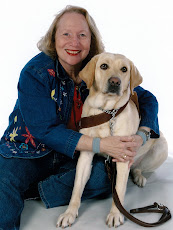
She is blind, 68, and, as she likes to joke, "between husbands." Yet she took a deep breath last week and invited 15 total strangers to come to her Ballard apartment for a meeting, at 4 p.m. today.
The topic: The crashing economy. Specifically: What can we do?
"I think we're headed back to the days of the victory gardens," Claire said. "We have to figure out how to help ourselves. We can't be isolated. We can't sit around and wait for the government."
Hers is only one gathering, in one apartment. Still, it has the feel of a movement. Call it urban survivalist. Most of the ideas are not new, but the collapse of supposedly rock-solid institutions such as banks is taking it up a notch.
It's the do-it-yourself spirit. Only doing it together.
Claire's is one of about 40 household meetups in the Seattle area this weekend, prompted by Barack Obama's new "Organizing for America" project. Obama suggested the meetings last week, tapping his 13 million-deep e-mail network for the first time since becoming president.
He's trying to community organize the nation. He's got his own agenda: rallying support for his economic-stimulus bill.
But what struck me in talking to people leading these meetings is how little they are looking to Washington, D.C., for any help.
They support Obama, sure. But many feel the ways out of this crisis are local.
"If this was just about politics, or lobbying Congress, I wouldn't do it," said Rosetta Sanz, 60, a "grandma for change" who is holding a meeting in Puyallup. "To me, this is about what we can do for each other. Not what the government can do for us."
Jose Carino in North Seattle is using his meeting to try to form "volunteer groups for mutual aid." The idea is to help one another with routine tasks and services, such as child care. Only to do it off the usual grid.
In my one-hour talk with Claire Anderson, she mentioned barter networks. Local food cooperatives. Neighbor-to-neighbor financial loans. Clothing swaps. Even sewing circles to recycle clothes.
It's like the formation of credit unions back in the Depression, when banks had failed, so people made their own banking clubs.
Claire realizes most of her ideas for economic survival might have the perverse effect of pinching the economy.
"If you're ironing your clothes instead of going to the dry cleaner, you're hurting the dry cleaner," she said.
But there has to be a change in our easy-credit consumer culture, she said. Even if it's painful.
"I think we're in terrible trouble," she said. "I like how Obama throws it back on us. He says — what can you do? The point here is to get ready by going back to the one institution you know you can count on, which is community."
Despite all the hope about Obama, there is ample skepticism about the stimulus bill. Sanz called sending out tax-rebate checks "ridiculous." People seem to approve of the direct infrastructure and energy spending, because it builds something. Said Anderson: "A lot of it seems to be just doling out money."
Take the car-tax credit, added last week by the U.S. Senate. It would make interest payments on new-car loans tax deductible, for cars costing up to $49,500. The premise is to spur car sales.
Because the government doesn't have the money for this program, though, it would have to borrow it. So the government is borrowing more money in order to entice you to borrow more money. All to get us out of a crisis caused by ... too much borrowing!
Senators should go to some of these house meetings. They'd see that when people said they wanted change, they meant it.
Danny Westneat's column appears Wednesday and Sunday. Reach him at 206-464-2086 or dwestneat@seattletimes.com.
Copyright © 2009 The Seattle Times Company
Crisis stirs community spirit
Barack Obama's call to organize prompted about 40 household meetups in the Seattle area this weekend. And while people leading the meetings support Obama's agenda in D.C., many are looking for solutions closer to home.
You can find a list of local economic-recovery meetings at the Organizing for America Web site, my.barackobama.com/recoveryplan . Then type in your ZIP code. It was around the time the U.S. Senate decided to grant tax credits for buying $49,500 cars that Claire Anderson took the plunge.
She is blind, 68, and, as she likes to joke, "between husbands." Yet she took a deep breath last week and invited 15 total strangers to come to her Ballard apartment for a meeting, at 4 p.m. today.
The topic: The crashing economy. Specifically: What can we do?
"I think we're headed back to the days of the victory gardens," Claire said. "We have to figure out how to help ourselves. We can't be isolated. We can't sit around and wait for the government."
Hers is only one gathering, in one apartment. Still, it has the feel of a movement. Call it urban survivalist. Most of the ideas are not new, but the collapse of supposedly rock-solid institutions such as banks is taking it up a notch.
It's the do-it-yourself spirit. Only doing it together.
Claire's is one of about 40 household meetups in the Seattle area this weekend, prompted by Barack Obama's new "Organizing for America" project. Obama suggested the meetings last week, tapping his 13 million-deep e-mail network for the first time since becoming president.
He's trying to community organize the nation. He's got his own agenda: rallying support for his economic-stimulus bill.
But what struck me in talking to people leading these meetings is how little they are looking to Washington, D.C., for any help.
They support Obama, sure. But many feel the ways out of this crisis are local.
"If this was just about politics, or lobbying Congress, I wouldn't do it," said Rosetta Sanz, 60, a "grandma for change" who is holding a meeting in Puyallup. "To me, this is about what we can do for each other. Not what the government can do for us."
Jose Carino in North Seattle is using his meeting to try to form "volunteer groups for mutual aid." The idea is to help one another with routine tasks and services, such as child care. Only to do it off the usual grid.
In my one-hour talk with Claire Anderson, she mentioned barter networks. Local food cooperatives. Neighbor-to-neighbor financial loans. Clothing swaps. Even sewing circles to recycle clothes.
It's like the formation of credit unions back in the Depression, when banks had failed, so people made their own banking clubs.
Claire realizes most of her ideas for economic survival might have the perverse effect of pinching the economy.
"If you're ironing your clothes instead of going to the dry cleaner, you're hurting the dry cleaner," she said.
But there has to be a change in our easy-credit consumer culture, she said. Even if it's painful.
"I think we're in terrible trouble," she said. "I like how Obama throws it back on us. He says — what can you do? The point here is to get ready by going back to the one institution you know you can count on, which is community."
Despite all the hope about Obama, there is ample skepticism about the stimulus bill. Sanz called sending out tax-rebate checks "ridiculous." People seem to approve of the direct infrastructure and energy spending, because it builds something. Said Anderson: "A lot of it seems to be just doling out money."
Take the car-tax credit, added last week by the U.S. Senate. It would make interest payments on new-car loans tax deductible, for cars costing up to $49,500. The premise is to spur car sales.
Because the government doesn't have the money for this program, though, it would have to borrow it. So the government is borrowing more money in order to entice you to borrow more money. All to get us out of a crisis caused by ... too much borrowing!
Senators should go to some of these house meetings. They'd see that when people said they wanted change, they meant it.
Danny Westneat's column appears Wednesday and Sunday. Reach him at 206-464-2086 or dwestneat@seattletimes.com.
Copyright © 2009 The Seattle Times Company
Subscribe to:
Posts (Atom)